
I learned about presence the hard way.
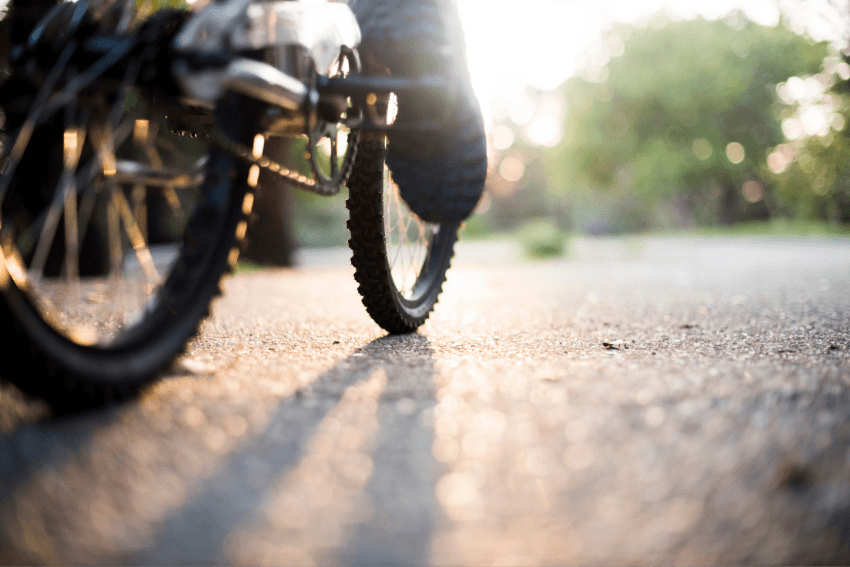
I was maybe nine or ten, riding my bike around the neighborhood, completely fearless — until I wasn’t. I took a corner too fast, and the tree that had always been there, minding its own business, introduced itself rather abruptly.
In that moment, I was very present.
But here’s the thing: before the tree, I was present too. Not because I was practicing mindfulness, following a breathing exercise, or setting an intention. I was present because there was nothing pulling me anywhere else. No notifications. No camera roll to curate. No algorithm deciding what I should be thinking about next. Just me, my bike, and, eventually, the tree.
That’s how it was back then. Presence wasn’t a practice. It was just Tuesday.
And somewhere along the way, for most of us, Tuesday got a lot more complicated.
When Presence Was Simply Life
Cast your mind back — if you’re old enough to do so — to a childhood that looked something like this:
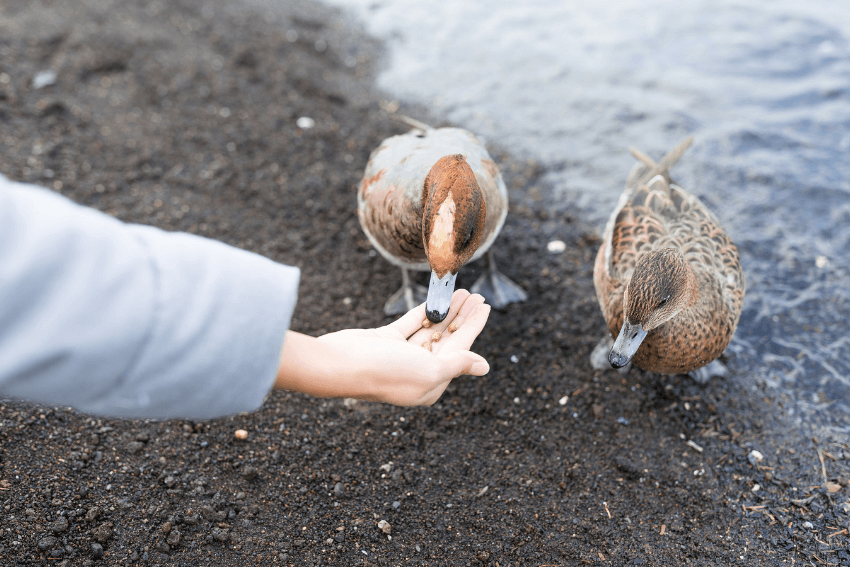
You rode your bike around the neighborhood until the streetlights came on. You fed the ducks at the park, unsupervised and unbothered. You played in the snow until your fingers went numb. You babysat yourselves. You got bored — genuinely, deeply bored — and then you figured out something to do about it.
There was one computer in the house. One landline. If someone was using it, you waited. Renting a VHS tape was a genuine treat, chosen carefully because you could only pick one. And photographs? Each roll of film held 24 precious frames. You thought before you clicked — because developing that roll cost money, and the moment had to be worth it.
Without knowing it, you were practicing the purest form of presence imaginable.
Every duck you fed was fully experienced — not documented, not filtered, not captioned. Just felt. Every photograph was a conscious, deliberate choice. Every phone call was a real conversation, because it was the only option. Every moment of boredom became an invitation to create, imagine, and explore. Boredom, it turns out, is just the waiting room for creativity.
You weren’t being mindful. You were just alive, in the only moment that existed: the present one.
Then the World Changed
It didn’t happen overnight. It crept in gradually — first the internet, then the smartphone, then the notification, then the algorithm — until one day the default setting of human life shifted from presence to distraction.
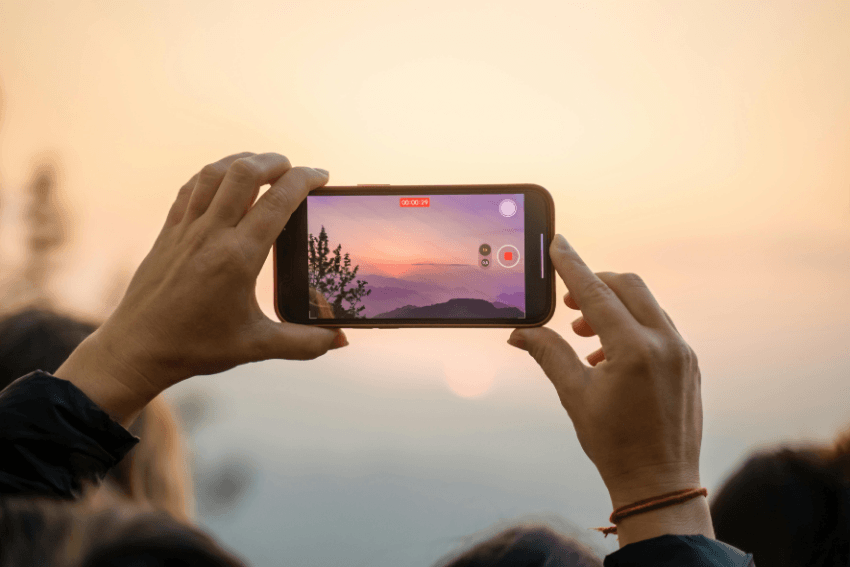
And now we live in what’s called the attention economy: a world specifically engineered to pull your focus away from wherever you are and toward a screen. Constant notifications fragment our awareness into smaller and smaller pieces. The ability to do one task at a time — to stay present with a single conversation, a single meal, a single thought — has become genuinely difficult for many people.
We are, collectively, more distracted than any generation in human history. And the stress and tension that come with that fragmentation are very real, showing up in our bodies, our emotions, our relationships, and our mental health.
The results are visible everywhere, and they break my heart.
Younger generations — through absolutely no fault of their own — grew up inside this architecture. They never knew the world any other way. And what’s emerging is genuinely concerning: shorter attention spans, difficulty sitting in silence, anxiety that spikes when a phone battery dies. Ghosting instead of hard conversations. Texting instead of calling. An entire generation that has never experienced boredom long enough to find out what lives on the other side of it: confidence, creativity, and the quiet ability to simply be.
Sometimes I wonder what we traded away without realizing it. The technology arrived, and we welcomed it, reasonably enough. But somewhere in the exchange, something got buried. Not lost. Buried. And anything buried can be found again.
Here’s what I know for certain: we should be envious of the future, not of the past.
The goal isn’t to go back to one landline and 24 photos on a roll of film. The goal is to carry forward what those limitations quietly taught us — that this moment, right here, is enough. That boredom is not the enemy; it’s the doorway. That the person in front of you deserves your eyes, your full attention, your actual presence. That joy lives in the big things we almost missed while we were looking at a screen, and in the small, everyday things we stopped noticing altogether.
The Conflict I Need to Be Honest About
Here’s where I have to tell you something that might seem contradictory.
I built an app.
It lives on a phone — the very device that is, for many people, the primary source of distraction in their lives. And when a marketing consultant told me early on that I needed to make it “stickier,” I felt immediately, viscerally uncomfortable. Sticky. The word itself felt wrong. Like the goal was to trap people rather than help them.
So let me tell you what the Do Happy app actually does.
It asks you to go outside. To call someone you love — an actual phone call, not a text — and to do it regularly. To perform an act of kindness. To notice something beautiful. To eat something delicious and really taste it. To move your body. To appreciate. To laugh. To engage fully with your relationships and the world around you. Nearly everything the app asks of you happens off the app, out in the world, in the messy and magnificent present moment of your actual life.

The app exists to guide you back to your life — suggesting the small, meaningful actions that make a day worth living — and then to document what happened. To build a happiness memory book that grows more beautiful the more you live. Because we humans have a tendency to focus on the negative, to let the hard days overshadow the good ones. That negativity bias is wired into us for survival, so it takes intention to counteract it. The memory book exists to remind you, on your worst days, that good ones happen. Regularly. They always have.
If the app helps people not need the app, it will have succeeded.
That’s the only kind of technology I’m interested in building — the kind that points you back to your life rather than replacing it. And honestly? That’s what being present means in a modern world: not rejecting technology entirely, but learning to use it with the same intentionality our childhood required of everything.
How I Found My Way Back
I won’t pretend I’ve always had this figured out. Presence is something I’ve had to reclaim, intentionally, one small habit at a time.
And oddly, the moment that helped most was one of the hardest the world has collectively experienced. The global pause of 2020 — amid all its devastation and grief, and there was so much of both — handed many of us something we hadn’t had in years: stillness. The treadmill stopped. And in the quiet, a lot of people woke up to what actually mattered.
For me, it crystallized into a handful of daily practices that have become non-negotiable:
A walk outside every day, if at all possible. Even better with someone you love, if you can. Not a walk while listening to a podcast or checking emails. Just a walk. Eyes open. Paying attention to what’s actually there. It’s remarkable what you notice when you’re not simultaneously doing three other things.
A vegetable garden in the summer. There is nothing quite like putting your hands in the soil, watching something grow from a seed, and then eating what you grew, still warm from the sun, picked at exactly the right moment. The garden teaches you something essential: the harvest doesn’t wait. Presence isn’t just a virtue here. It’s a requirement.
Birding. I came to this recently, and I love it with my whole heart. Birding is nature’s treasure hunt. You have to be at the right place at exactly the right moment, completely still, completely alert. Sometimes you wait and wait and catch a glimpse for just a split second before the bird is gone. And somehow that makes it more magical, not less. To find a bird, you have to surrender entirely to the present moment. There’s no other way. (And research suggests that this kind of focused attention may actually strengthen the brain regions involved in perception and attention, potentially slowing their age-related decline.)
One-minute meditation videos of beautiful, calm moments: a sunset, raindrops on a window, leaves moving in the wind. Just to notice, and to keep. One minute sounds like nothing. But when you stop completely and simply stare at something beautiful, one minute feels like a long, slow exhale. Time actually changes. Peace arrives faster than you’d think. It might be the simplest way I know to come back to the present, and the most underrated.
And journaling — specifically, documenting the small good things that happen every single day. I haven’t missed a day in years. And on the days when everything feels hard, that record is proof that good exists. That it always has. That it will again.
None of these practices are complicated. None of them require a subscription or a certification or a special cushion to sit on. They just require showing up to your own life, in your own moment, with your own eyes open.
How to Be More Present: A Few Places to Start
Whether you’re reclaiming something familiar or building it from scratch, the ability to cultivate mindfulness and stay present in everyday life grows with practice.
Here are some gentle places to begin — no judgment, no impossible standards, just small shifts that make a huge difference over time. You don’t need to adopt all of these at once. If one resonates, that’s your place to start:
- Do one thing at a time. Just one. The dishes, the conversation, the walk. Give it all of you, even for five minutes. Notice how different it feels to be fully engaged with a single task versus half-present for many.
- Put the phone face down during meals. Let the food actually taste like something. Let your senses do what they were designed to do: taste, smell, notice. Savor it.
- Make a phone call instead of sending a text. Hear someone’s voice. Let them hear yours. There’s something about real talking and real listening that a message thread simply cannot replicate.
- Go outside without an agenda. Observe what’s there: the light, the sounds, the birds!, the temperature of the air. Let your body remind you where you are.
- When you feel anxious or pulled toward worry, when your mind wants to race forward into the future or backward into the past, take three slow, deep breaths. Not to fix anything. Just to come back to your body, which always exists in the present moment. Meditation can help with this too; even a few minutes of intentional stillness trains the mind to stop thinking on autopilot and simply be.
- Notice one beautiful thing today. Just one. Write it down if you can. Appreciation, it turns out, is a practice: the more you look for good stuff, the more of it you find.
- Make eye contact. Listen to understand rather than to respond. Be the person someone feels truly heard by. That process — of genuinely receiving another person — is one of the most powerful forms of presence there is.
None of these are techniques to master. They’re just small invitations to live in the moment. The same way you did, without even thinking about it, every time you got on that bike.
You Already Know How to Do This
Here’s the truth at the center of everything:
Presence isn’t a skill you need to learn. It’s one you need to remember — or, if you grew up in a world that never offered you the quiet to find it, one you get to discover for the very first time. Either way, it’s available to you. Right now. In this moment.
Not the moment after you finish scrolling. Not when life settles down or the to-do list gets shorter or the circumstances become more convenient. Now — this specific, unrepeatable, quietly extraordinary now.
The ducks are at the park. The sky is doing something worth looking at. The people you love are here, wanting to be truly seen by you.
And you — whatever age you are, whatever generation you belong to, however long it’s been since you felt fully present in your own life — you still know how to show up for it.
You always have.
Want to explore the habits that bring you back to yourself? Discover the 10 elements of happiness that make presence a daily practice.