By all aerodynamic calculations, the bumble bee should not be able to fly.
The body is too large. The wings are too small. For decades, an old back-of-napkin calculation, built for fixed-wing aircraft, was passed around as proof that the bumble bee defied physics. It didn’t. The math was wrong, not the bee. The bee was never impossible. It was just being measured by the wrong standard.
What researchers eventually discovered is that the bumble bee doesn’t fly like a plane. It flies like nothing else, really: short, rapid, asymmetric wing strokes that generate lift through controlled instability. The thing that looked like a fundamental flaw turned out to be a completely different kind of engineering. Not broken. Just operating on different principles than anyone had thought to look for.
And then there is buzz pollination.
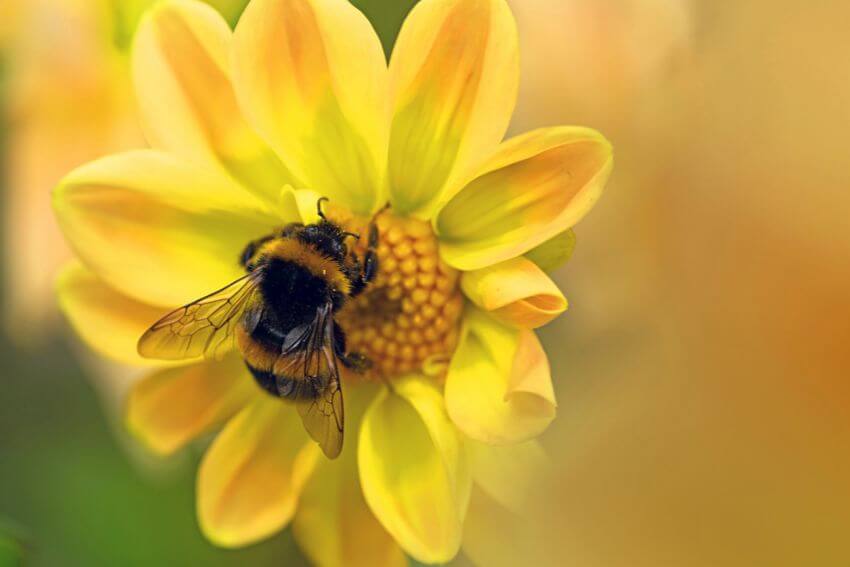
Some plants, such as tomatoes, blueberries, and peppers, lock their pollen away inside tubular anthers. To release it, you need a very specific vibration. Bumble bees do this by decoupling their wings from their flight muscles and vibrating their entire thorax at around 270 Hz, the equivalent of a C-sharp above middle C on the piano. The plant opens. The pollen releases. Life continues.
Honeybees cannot do this. Most native bees don’t either. But bumble bees do it better than almost anyone, and some plants depend on them specifically for it.
The bumble bee does not protect itself from caring too much. It simply has a frequency, and it shows up, and things bloom.
There are people just like this.
The Nurses Always Know
When you work as a locums physician, you walk into a new hospital as a stranger. No history, no established trust, no reputation that precedes you. Just a new face in scrubs on the first day.
I noticed something at every hospital I worked in. There was always a nurse, sometimes two, who watched me very carefully at first. Not unfriendly. Just measuring. Waiting to find out which kind of doctor I was going to be: the kind who treated them respectfully, or the kind who treated them as staff.
I never tried to win them over. What I actually tried to do, deliberately, knowing I was temporary and that attachment would only make leaving harder, was stay a little distant. Protect myself from caring about people I would eventually have to leave.
It never worked.
I would just show up. Be polite and respectful. Actually listen. Care deeply about my patients’ well-being and whether they were free of pain and comfortable, truly settled with stable vitals, before I left the recovery room. Thank the nurses when they caught something I inevitably missed. And somewhere in the middle of an ordinary shift, the wary nurse would stop being wary of me.

I have thought a lot about why genuine care is so immediately recognizable to people who don’t always receive it. I think it is because real caring doesn’t have the texture of performance. It doesn’t land the same way. The recovery room nurses have spent years developing a strong sense for difference, because difference matters to them every single day. They know what they are feeling.
What I didn’t fully understand then is that I was doing what bumble bees do. I wasn’t trying to pollinate anything. I just had a frequency, and I showed up, and things opened.
I know this because of what happens when I come back after time away. The nurses tell me that they missed me. And my reaction, every time, is surprise. Me? Really? I’m just me. I didn’t do anything special. I was just being myself.
That reaction, I’ve come to understand, is the point.
When the System Doesn’t Run on Your Frequency
Here is something worth naming honestly, because a lot of good people are sitting with it right now and aren’t sure what to call it.
There is a difference between an environment that is hard and an environment that is misaligned. Hard environments ask a lot of you. Misaligned environments take from you without knowing what they’re taking.
The nurses knew what I was offering. Most institutions I worked at didn’t.
Locums work means accepting assignments away from home. Typically, to make the trip worthwhile for both you and the hospital, an assignment needs to last at least one week. On multiple occasions, one of the hospitals asked me to come for just two or three days. I said yes to those assignments because I showed up for the places that needed me.
What the locums contracts offered, I learned to understand, was flexibility for hospitals. Hospitals could cancel thirty days out with no penalty to them. Only I suffered the consequences: the rearranged schedule, the lost income, the particular exhaustion of having said yes and of organizing my life around a commitment that was binding only in one direction.
Over time at that hospital, as the staffing crisis that had originally brought me there stabilized, I became less visible in other ways too. Frequently sent offsite, away from the nurses I’d come to genuinely love working alongside. Last assigned to cases for the next day, which meant waiting in anticipation to find out which assignment nobody wanted because that would be mine.
Many days, I’d find out just 30 minutes before someone would come to relieve me, exactly at 5 p.m., no later since they didn’t want to pay for overtime, and no earlier since they wanted me to work every single minute I was there. I’d be scrambling to review upwards of a dozen charts as quickly as I could to learn about my patients for the next day.

The system wasn’t cruel about any of it. It was just indifferent. Optimized for coverage and throughput, not for the particular thing I brought.
The people in it weren’t bad people. They were adapted people. They had learned, through years of working within a system that rewarded self-protection, to move through it efficiently. Some of them were genuinely kind. None of them had the bandwidth to notice that someone was being slowly made invisible. It’s possible this was due to fear of rocking the boat, of losing standing, of being the next one made invisible: that fear is its own kind of invisible tax on everyone inside the system.
This is what happens in many institutions, in medicine and far beyond: the people who care most end up carrying the most, because they will. The system learns this about them and relies on it. Not maliciously. Just structurally. The caring ones absorb the stress, the anxiety, the short-notice asks, and the quiet indignation of being undervalued, and the system never has to reckon with that cost because the caring ones absorb it quietly and keep showing up anyway.
There is an observation that anyone who has worked in healthcare, education, or any other high-care field will recognize immediately: the ones who prioritize their own well-being above others seem to survive everything, while the compassionate ones burn out and leave.
Most people feel this as a personal failing when it’s happening to them. It isn’t. It’s a systems problem. Institutions that don’t know how to receive what their best people are offering will lose them, through ten thousand small indignities that each seems minor and add up to an answer.
The day I finally left, I felt one thing: relief. And relief, when you were hoping to feel sad, is the most clarifying emotion there is. It means you’ve been carrying something heavier than you admitted for longer than you realized.
What I grieved, and still carry, was not the hospital. It was the nurses and the anesthesia techs. The ones who saw me. I miss them. That grief is real and belongs here because leaving a misaligned system does not mean that nothing in it mattered. It means you stopped letting the gap between what you offered and what was received erode something irreplaceable.

Caring Too Much Is Not the Problem
There is a version of this story where the lesson is: stop caring so much. Protect yourself. Stay distant. Set limits on what you give. Don’t let people in.
I tried that. It doesn’t work, not for people like me. And more importantly, it’s the wrong lesson.
Research consistently shows that social connection is one of the strongest predictors of long-term health. People with deep, reciprocal relationships live longer and fare better physically and mentally.
Caring is not what depletes you. Caring without reciprocity is what depletes you. Pouring yourself into a system that takes without recognizing what it’s receiving is what depletes you.
The bumble bee does not stop buzzing because some flowers don’t open. It moves.
This is not a call to become harder or more strategic or less yourself. It is a call to become more aware of where your frequency lands and where it doesn’t. To recognize the difference between environments that receive what you offer and environments that simply consume it. To understand that the problem is not that you care too much. The problem is a world that has not yet figured out how to build systems worthy of the people who care.
Setting boundaries matters. Protecting your own well-being matters. Taking care of yourself is not a luxury or a short-term fix; it is what makes sustained, genuine caring possible at all. You cannot pollinate from empty.
But the first step is not becoming someone who cares less. The first step is accepting that your caring is not the problem. The problem is your environment.

The Gift You Didn’t Know You Were Giving
Here is what I have come to understand about bumble bee people, and I say this having been surprised by it myself: they often have no idea what they are.
You are not doing anything special, in your own mind. You are just being yourself. Showing up the way it seems obvious to show up. Treating people with the respect and consideration that seems like simple decency. Caring about the outcome, because of course you care about the outcome.
It doesn’t feel like a gift. It feels like the baseline.
But for the people on the receiving end of it, especially those who have spent years in systems that don’t run on that frequency, it is a gift. A significant one. The kind that reshapes what people believe is possible in a room, in a shift, in a working relationship. The kind that people don’t fully acknowledge until it’s gone.
That is the hardest part, maybe. The gift is most visible in its absence. The nurses who tell you they missed you. The community that feels different after you leave. The colleagues who say, quietly, that things haven’t been the same. You gain that recognition too late to feel it when it would have mattered most, which is while you were still there giving it.
This is not an argument for staying in places that don’t deserve you in hopes that they’ll eventually notice. It is an acknowledgment that the love was real, the impact was real, and the loss, theirs and yours, is real. You are allowed to grieve that even as you move toward something better.
What I want you to know is that the ability to make people feel seen, supported, and cared for is not ordinary. Most people go their entire careers without it. You do it by accident, by just being yourself, and that is exactly what makes it irreplaceable.

Don’t let anyone, including yourself, convince you that’s a burden to manage. It’s the thing you’re here to do. The question is only where you’re doing it.
Where That Energy Actually Belongs
On the nights between hospital shifts, alone in hotel rooms after long days in the OR, I was quietly building a little dose of happy, writing about happiness and humanity and what it means to be a good person in a world that doesn’t always make that easy. Writing, honestly, the things I needed someone to say to me.
I didn’t know then that I was doing what bumble bees do. I just had a frequency, and I kept showing up, and slowly something started to bloom.
The locums chapter had to close for this one to flourish. I understand that now, in a way I couldn’t then.
If you are a person who cares the way I’m describing, who connects without strategy, who shows up fully, who makes rooms warmer just by being in them, you already know what it costs to be in the wrong environment. You have felt the slow drain of giving to a system that doesn’t know what to do with what you’re offering. The mental and emotional weight of that struggle is real. It is not weakness. It is the cost of caring deeply in a profession, or a relationship, or a community that doesn’t yet know how to receive it.
What I want you to consider is the other half of that equation: what becomes possible when that same energy lands somewhere that can receive it. The confidence that comes from being seen. The sense of security that grows when your caring is met rather than consumed. The freedom of focusing your energy where it actually lands.
There is a practice I created for exactly this. Not a grand gesture, something quieter. The Cherish List is a gratitude practice built around the people who actually see you: the nurses and techs who know immediately, the friends who show up, the loved ones who reflect something back. The practice is simple: notice the moment, record it, close the gap between how much you cherish someone and how much they know it. It is, in its own way, a form of self-care: the deliberate act of acknowledging the people and places that are actually worthy of your energy.
Bumble bee energy directed at people and places that can receive it is not just sustainable; it is what makes other people bloom.
The world needs people who care the way you care. Not fewer of them. Not more self-protective ones. Just people who have learned to recognize and choose the flowers worth buzzing for.
To the nurses and techs I worked with throughout the years, I think about you frequently. Hello, and thank you. 🩵
Some plants only reproduce because bumble bees exist. Don’t let anyone convince you that’s a flaw in your design.