
There you are again, staring at a blank page in your gratitude journal. You start with good intentions, but end up writing the same three things: “I’m grateful for my family, my health, and my home.”
And honestly, you are. So why does it feel like you’re trying to convince yourself?
Turns out, your brain knows the difference between going through the motions and actually noticing something that matters. Writing “I’m grateful for my family” for the 47th time isn’t a lie—but you’re not feeling it either. You’re just checking a box.
Real gratitude is specific. It’s noticing the exact moment your partner made you coffee without asking. It’s the relief you feel when your friend texts right as you’re starting to debate whether to “bother” them. It’s also every time your dog wags its tail eagerly when you get home. It’s at these moments when your heart fills with gratitude.

Research shows that people who express gratitude regularly have better mental health, stronger relationships, and greater life satisfaction. But here’s the catch: it has to feel real, not performative. That means getting specific—even if it’s something simple.
If you need something to spark the feeling before you start writing, a few gratitude quotes can help you find the right headspace.
This blog post offers 75 gratitude journal prompts to help you see what’s already there—the small moments, the quiet support, and the experiences that stick with you.
Here’s how to make them work for you:
How to Use These Prompts
Pick one prompt that resonates with where you are today. Set a timer for 5 minutes and write freely—no editing, no judgment. Some days you’ll write three sentences. Other days you’ll fill pages. Both are exactly right.
Don’t feel pressure to go in order. The prompts are organized from concrete observations (easier when you’re struggling) to more reflective questions (richer when you’re in a better place). Think of them as a ladder: start on whatever rung feels stable today.
Create a running gratitude list. Flip to the last page of your notebook and start a numbered list. After you finish writing about a prompt, add one line to that ongoing list—the thing that stood out most from what you just wrote. Over weeks and months, you’ll build a collection of specific moments worth remembering. Review your gratitude list whenever you need a quick boost.
Revisit prompts as you grow. Questions like ‘Who makes you feel like your authentic self?’ or ‘What’s something you do now that seemed impossible a year ago?’ will have different answers—and deeper meaning—as your life changes.
Notice what you keep coming back to. After a few weeks, flip through your entries. What themes emerge? What do you write the most about? That’s valuable information about what truly matters to you.
Your 75 Gratitude Journal Prompts
Getting Started
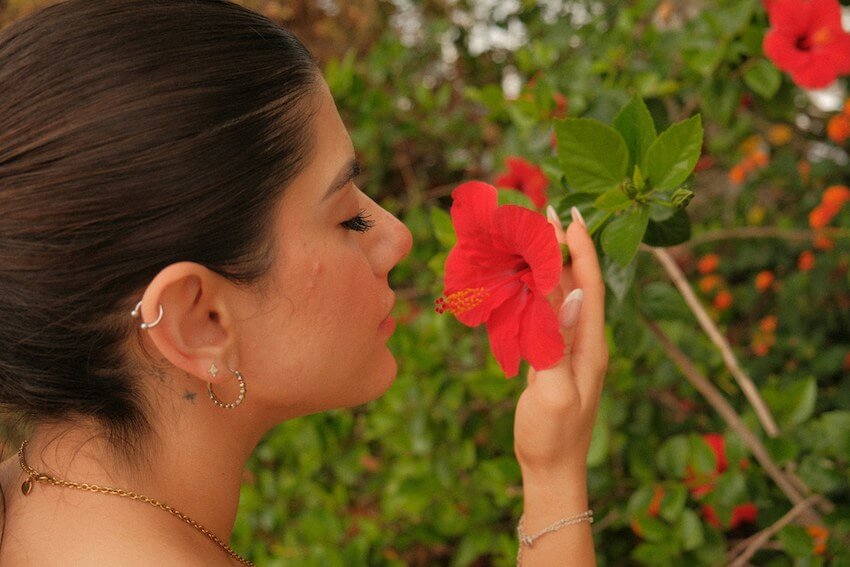
Why start here: When gratitude feels forced, or you’re struggling, abstract prompts can feel impossible to answer. These prompts anchor you in immediate sensory experience—things you can see, touch, taste, and feel right now. There’s no pressure to feel deeply moved; you’re just noticing what’s actually present.
If you’re new to journaling or going through a hard time, this is your home base. These prompts also lay the foundation for deeper reflection later on.
- What’s one thing you touched today that felt good? Describe the texture and why it stood out to you.
- Who made you smile today, even briefly? What did they do or say?
- What’s something you ate recently that you genuinely enjoyed? What made it taste so good?
- What’s working well in your home right now? How does it make your daily life easier or more pleasant?
- What’s one thing your body did for you today without you thinking about it? How does your body support you in ways you might not notice?
- What’s a sound you heard today that you appreciated? Why did you notice it?
- What’s something you own that makes your daily routine easier? How does having it change the flow of your day?
- Who helped you with something this week, even something small? What difference did it make?
- Describe a recent moment when you felt physically comfortable. What made that moment feel so good?
- What’s something in nature you noticed recently? What drew your attention to it?
- What’s a skill you have that comes naturally to you? How does having it make your life easier?
- What’s a routine or ritual you have that makes you feel grounded? How does it show up in your day?
- What’s something you learned recently, even something tiny? Why does knowing this matter to you?
- What’s a small luxury you had access to today? How did it make your day better?
- What made you laugh or even just grin in the past few days? What was happening, and who was there?
People & Connections

Why this matters: These prompts help you recognize the web of support around you, from deep friendships to small kindnesses from acquaintances.
Research shows that social connection is one of the strongest predictors of happiness and resilience. These prompts train you to notice not just grand gestures, but the quiet ways people show up for you—the friend who challenges you, the person who accepts your silence, the stranger who made your day easier. This is a reminder that you’re not navigating life alone.
- Who checked in on you recently? What did that mean to you?
- What’s something you appreciate about someone you see regularly but don’t know well? What is it about them—a neighbor, barista, or colleague—that stands out to you?
- What’s something someone taught you that you still use? How has it made your life better?
- Who do you feel comfortable being quiet around? What makes that silence feel safe?
- What’s a trait you admire in someone close to you? How does it affect your life?
- Who has supported one of your interests or hobbies, even if they don’t share it? How did they show that support?
- Who makes you feel like your authentic self? What do they do that creates that feeling?
- What’s a conversation you had recently that left you feeling energized or understood?
- What’s something someone did for you that they probably don’t even remember? Why has it stuck with you?
- Who celebrates your wins with you? What does their excitement mean to you?
- Who has been patient with you while you figured something out? How did that patience help you?
- What’s something you learned about yourself through a relationship? How did they help you see it?
- What’s a quality in someone that inspires you to be your best self? How have you seen that quality in action?
- Who has forgiven you for something, big or small? How did that forgiveness change things for you?
- Who believes in you, even when you’re doubting yourself? How do they show that belief?
Personal Growth

Why this builds: Here, the focus turns inward to recognize your own development. You’ve been through hard things and learned from them. This section bridges gratitude with self-compassion, helping you appreciate your resilience, growth, and the choices you’ve made to align with your values.
It’s easy to fixate on our struggles; these prompts help you see how far you’ve actually come.
- What’s a challenge you’ve overcome that you rarely give yourself credit for? What does overcoming it mean to you?
- What’s something you do now that seemed impossible a year ago? What does that tell you about yourself?
- What’s a mistake you made that taught you something valuable? How has that lesson served you since?
- What’s a fear you’ve faced, even if you haven’t conquered it yet? What did facing it show you about yourself?
- What’s something difficult you chose to do because it aligned with your values? What did that choice give you?
- What’s a habit you’ve built that your past self would be proud of? What has this habit brought into your life that you’re thankful for?
- How have you been kinder to yourself lately? What made you realize you deserved that kindness?
- What’s something you’ve learned to say no to? What did that make space for?
- What’s a strength you developed from going through something hard? What does having that strength mean to you?
- What’s something you’re getting better at, even slowly? What does that progress mean to you?
- What’s a boundary you’ve set that improved your life? What’s different now because of it?
- When was the last time you showed up for yourself in a meaningful way? How did that make a difference?
- What’s something you’ve changed your mind about as you’ve grown? What has that shift meant for you?
- Describe a moment where you surprised yourself with how calmly you handled something. What does that moment say about who you’ve become?
- What’s a way you’ve become more patient or compassionate? How has that changed your relationships or daily life?
Meaning & Perspective

Why go deeper: These prompts ask you to hold two truths at once: life is hard AND there’s meaning in the difficulty. They invite you to look at your experiences with nuance—recognizing that setbacks sometimes redirect you, that losses can deepen appreciation, that struggles connect you to others.
This is where it gets real.
- What’s an ordinary part of your life that quietly makes it better? How does it show up for you day to day?
- What’s something in your life right now that you worked hard to create? What does having it mean to you?
- What’s a way you’ve been lucky that has nothing to do with your efforts? How does that show up in your life?
- What opportunity do you have right now that you might overlook because it’s not flashy? What could it become if you gave it more attention?
- What’s something in your life right now that used to feel out of reach? How does having it feel?
- What’s something you value more now than you did when you were younger? What helped you see its importance?
- What’s something hard you’re going through that’s teaching you something? What has that lesson already started to change in you?
- What’s a small thing that happened that changed your life for the better? What did it eventually lead to?
- What’s a ‘failure’ that led to something unexpectedly good? What did that good thing open up for you?
- What’s something about your life right now that you didn’t plan for, but that you’ve grown to appreciate? How has it shaped you?
- How have your struggles made you more empathetic toward others? When have you been able to use that empathy?
- What’s something someone before you built or created that you benefit from today? How does it show up in your life?
- What’s something about where you are right now in life that feels worth holding onto? Why does this moment matter?
- What’s a loss you’ve experienced that has made you more appreciative of what remains? What does that appreciation look like in your daily life now?
- Reflect on something painful from your past that you can now see with more compassion. What does that compassion feel like?
Purpose & Integration

Why end here: This section connects gratitude to action and values. These prompts ask: “What will you do with what you’ve been given? How do you want to show up?”
Research on post-traumatic growth shows that people who find meaning in hardship often do so by helping others or living more intentionally. These prompts help you integrate everything you’ve noticed and channel it toward purpose. This is where gratitude becomes fuel for engaging more fully with your life.
- What’s something you do that makes someone else’s life better? How do you know it matters to them?
- What’s a value you hold that has guided you through difficult decisions? How has it shaped who you are today?
- What’s a role you play in someone’s life that matters more than you give yourself credit for? What does showing up in that role look like for you?
- What’s something you have the freedom or ability to do that you want to use more intentionally? What does having that freedom mean to you?
- What’s something you’re grateful you didn’t give up on? What kept you going?
- What’s something you’re building, creating, or working toward that excites you? What does that excitement tell you about what matters to you?
- What’s a way you can share what you’ve been given or learned? Who might need to hear it?
- What’s a way you’ve used your own pain to help or understand someone else? What did that experience mean to you?
- What’s a legacy someone left you (a value, skill, or perspective) that you want to carry forward? How are you carrying it?
- What’s a way you want to show up more fully in your life? What does that desire to show up tell you about what matters to you?
- What support or resource do you have right now that you want to make better use of? What could it open up for you?
- What’s a way you’ve already made a difference that you might not fully recognize? How might someone else describe that impact?
- Describe your current season of life—what about it do you want to remember when it’s over? Who is part of making it meaningful?
- What’s something you’re grateful to have the chance to work on or improve? What does progress look like for you?
- What’s one thing—big or small—that you’re thankful for right now, at this moment?
What If Nothing Feels Worth Being Grateful For?
Some days, gratitude feels hard. That’s completely normal—and it doesn’t mean you’re doing it wrong. On those days, start smaller than you think you need to. Your pillow was comfortable. The water was clean. Your phone charged overnight. That counts.
Gratitude doesn’t have to feel profound to be real. Even just pausing for a moment and noticing one thing that’s okay—not great, just okay—is a valid practice. Say a quiet thank you out loud. Write one sentence. Light a candle and sit with it.
And if even that feels like too much today? Put the journal down. Be gentle with yourself. This is a tool, not a test you can fail. It’ll be here when you’re ready.
Making This Actually Work
Here are a few things that make all the difference:
Consistency beats perfection. Writing three sentences twice a week will do more for you than ambitious daily journaling that fizzles out after five days.
Push beyond your comfort zone occasionally. When you feel ready, try a prompt from a section that feels harder. Growth happens at the edges.
Try being intentionally grateful. Instead of waiting for gratitude to strike, actively look for five things you appreciate throughout your day. This trains your brain to notice the good.
Let gratitude guide how you act in the world. When you recognize what you value, it becomes easier to make choices that align with those values. Gratitude isn’t just reflection—it’s direction.
Use gratitude as one element. This isn’t a cure-all. Gratitude works best as part of a broader approach to mental health that includes connection, movement, purpose, and professional support when you need it. In fact, gratitude practice is one of the core elements of behavioral activation—a research-backed approach to building lasting well-being through structured daily practices. For some, gratitude also connects to faith and hope, adding spiritual dimensions to the practice.

Final Thoughts
Remember that blank page at the beginning? The one that felt impossible to fill?
It doesn’t have to be. Not because gratitude is easy—but because it doesn’t have to be big to be real. One specific moment. One honest observation. One quiet acknowledgment that something in your life is worth noticing.
That’s where it starts. And it turns out, there’s so much already there.
Gratitude is just one of the 10 research-backed elements in the aldohappy framework for building lasting happiness. Learn more about creating sustainable daily practices at aldohappy.com.